For newly engaged couples who already know that a marquee wedding at home is the right choice, the early stages of planning can feel both exciting and daunting. Hosting a wedding at a family home, on private land or at a country estate offers complete creative freedom, but it also requires careful thought from the very beginning. Unlike a venue, nothing is in place for you. Everything must be considered, planned and built with intention.
The most successful marquee weddings are not rushed into. They begin with the right foundations, clear priorities and informed decisions made early on.
Start With Expertise, Not Suppliers
The very first step should always be engaging an experienced marquee wedding planner. Before you speak to marquee companies or caterers, professional guidance allows you to assess what is realistically possible within your space, budget and timescale. A planner brings clarity, introduces options you may not yet have considered and ensures decisions are made in the right order.
Once this foundation is in place, the next steps typically follow naturally: securing a marquee supplier that suits both your vision and your land, and then appointing a caterer who can work seamlessly within that structure.
While marquee weddings can be planned in as little as four months, the ideal planning window is usually seven to nine months. This allows time for thoughtful decisions, proper site assessments and a smoother overall process.
The Importance of an Early Site Visit
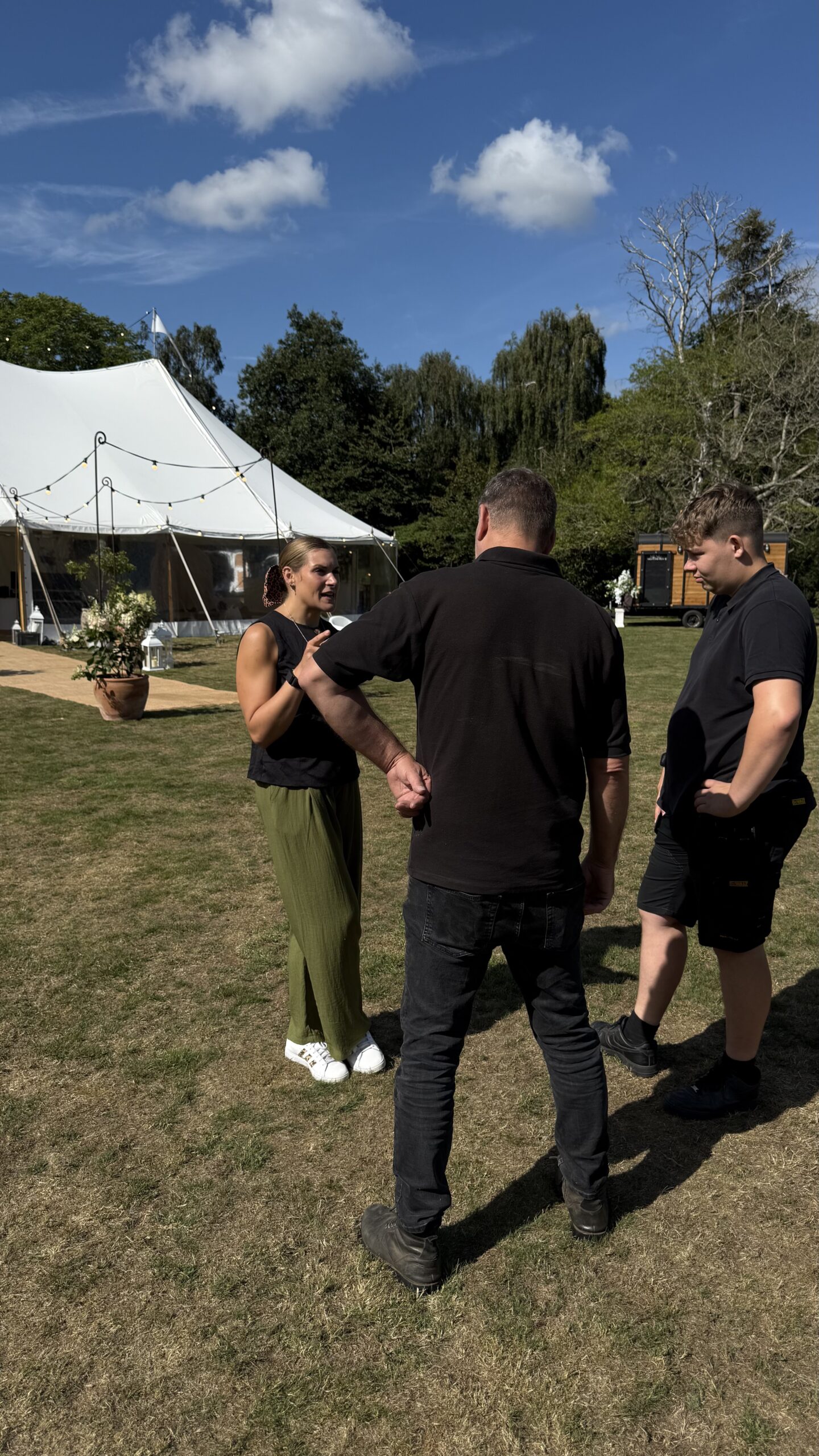
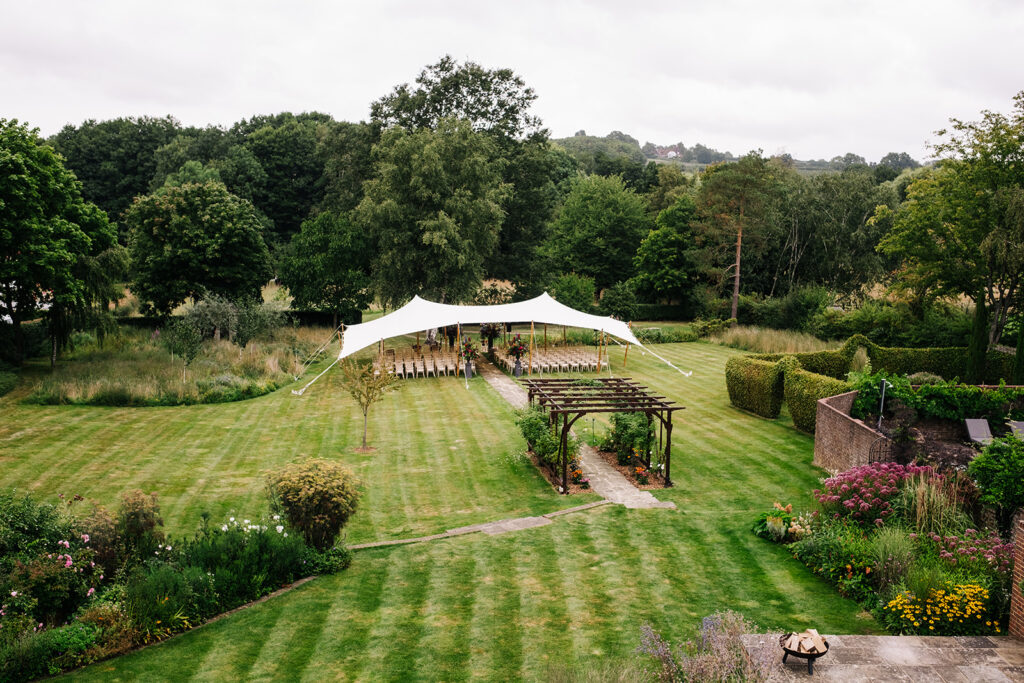
A site visit is where your wedding truly begins to take shape. This is not simply about choosing where the marquee will sit, but about understanding how the entire event will function.
Key considerations include ground levels and suitability, access for large vehicles, proximity to water and power, space for catering and suppliers, and whether any underground services are present. These practical elements are just as important as aesthetics.
During this stage, we also consider how the day will flow. Where guests arrive, how they move between spaces, whether the ceremony is on site or elsewhere, and how travel logistics affect the overall experience. These conversations ensure the design works not only visually, but operationally.
Choosing the Right Marquee Style
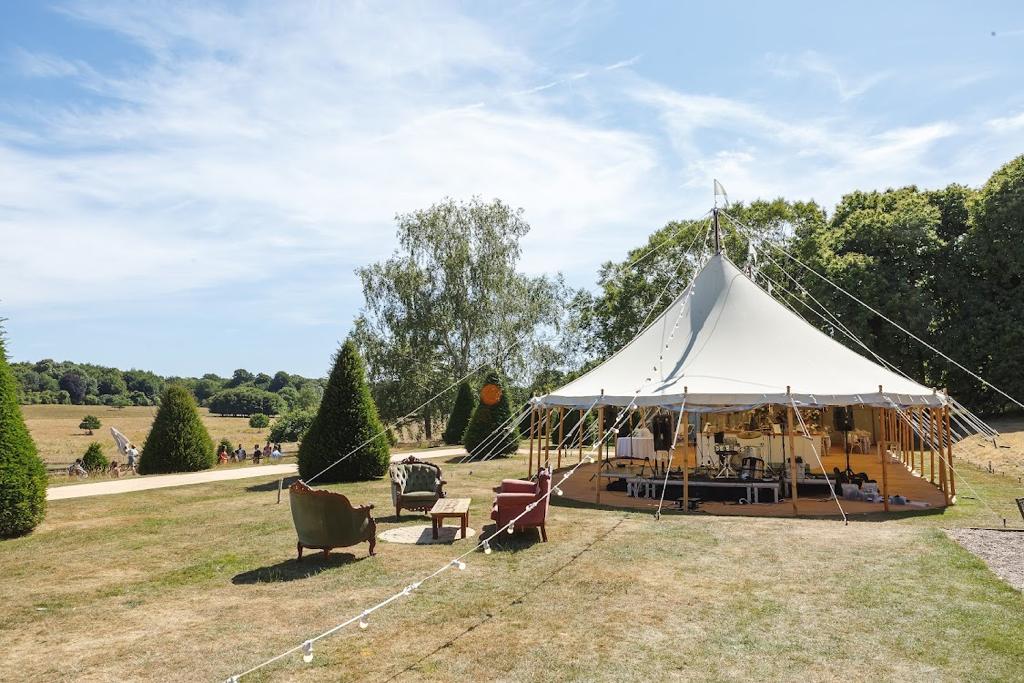
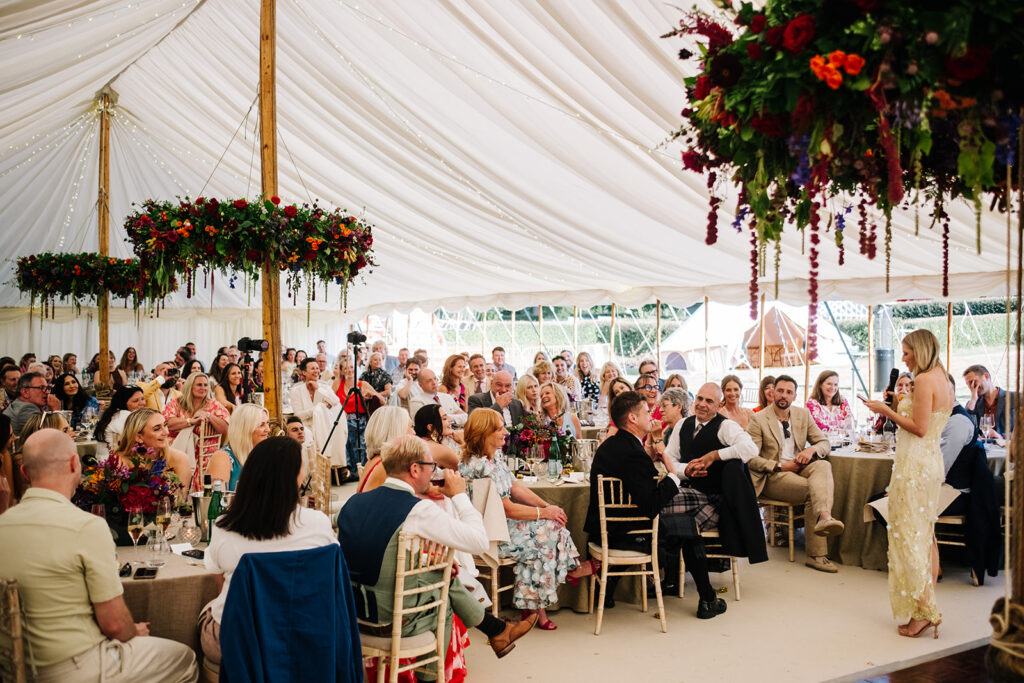
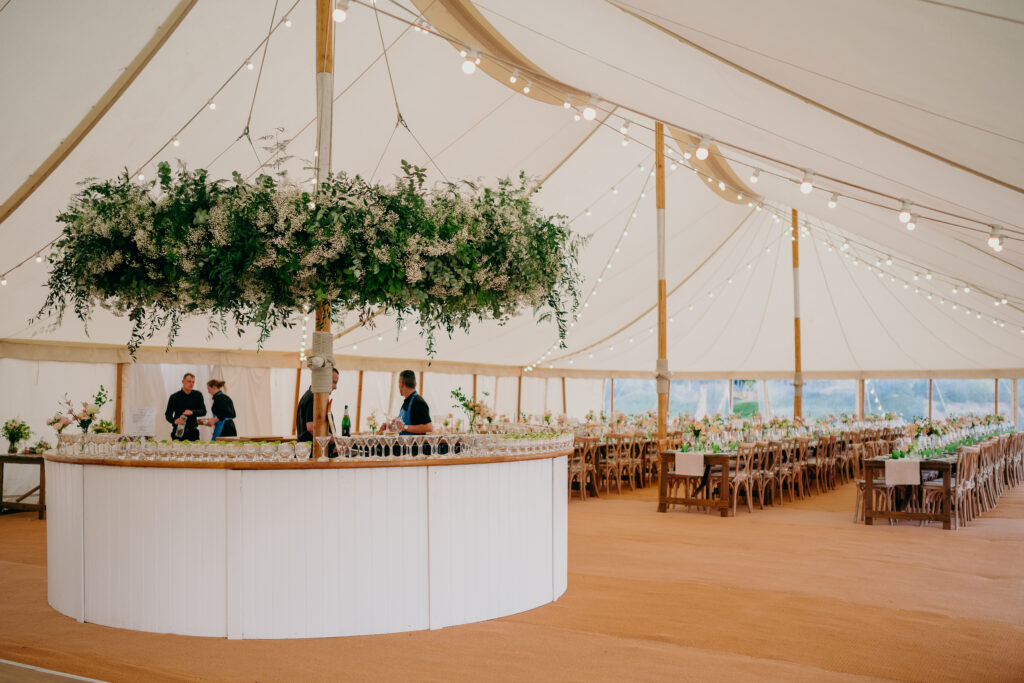
There is no single marquee style that suits every wedding. Sailcloth, traditional pole, clearspan and stretch tents all offer different benefits, and the right choice depends on far more than appearance alone.
Your marquee should support the atmosphere you want to create, the number of guests, the layout of the day and the guest experience from start to finish. A style chosen purely for aesthetics can sometimes work against the flow of the event, particularly when it comes to dining, dancing, acoustics and transitions between day and evening.
A well-chosen structure feels effortless on the day. Guests rarely notice it. They simply feel comfortable, connected and immersed.
Understanding the True Budget
A marquee wedding requires a clear and realistic budget from the outset. Typically, the marquee itself will cost between £15,000 and £25,000 depending on size, flooring, infrastructure and catering requirements.
Beyond the structure, it is essential to account for power, water, a catering tent, back-of-house spaces for suppliers, and a wet weather contingency. A detailed budget breakdown at the beginning of the process avoids compromises later and allows every element to be considered properly.
When budgets are planned holistically, decisions feel confident rather than reactive.
Designing the Guest Experience
One of the greatest advantages of an at-home marquee wedding is that you are in complete control of how your guests experience the day. This begins with how the space is used.
Some couples prefer one cohesive space that evolves throughout the event. Others enjoy creating distinct zones for ceremony, dining, dancing and relaxing. Parking, transport arrangements and access routes are just as important, as is ensuring suppliers have discreet access separate from guests.
When these details are planned early, the day feels calm, fluid and well paced rather than disjointed.
Planning for Wet Weather From the Start
Wet weather planning should never be a last-minute consideration. Regardless of the season, having a clear and well-designed alternative ensures you will feel confident whatever the forecast.
This means allowing adequate space for both dry and wet scenarios, considering covered walkways, appropriate flooring and how the layout adapts if plans change. When this is thought through from the outset, the experience remains consistent and enjoyable for both you and your guests.
We discuss this in detail on The Wedding Lounge Podcast
A Thoughtful, Personal Approach
The most important thing to remember is that an at-home marquee wedding is never a template. Every element can be designed around you, your priorities and how you want the day to feel.
Careful consideration of access, services and flow, alongside a clear budget and a strong wet weather plan, allows creativity to flourish without stress. There is no cookie-cutter approach. With the right guidance, your wedding can be entirely your own.
If you are planning a marquee wedding at home and would like to begin with a consultation and site visit, my full planning service is designed to support you from the very first conversation through to the final moments of the day.
- share -